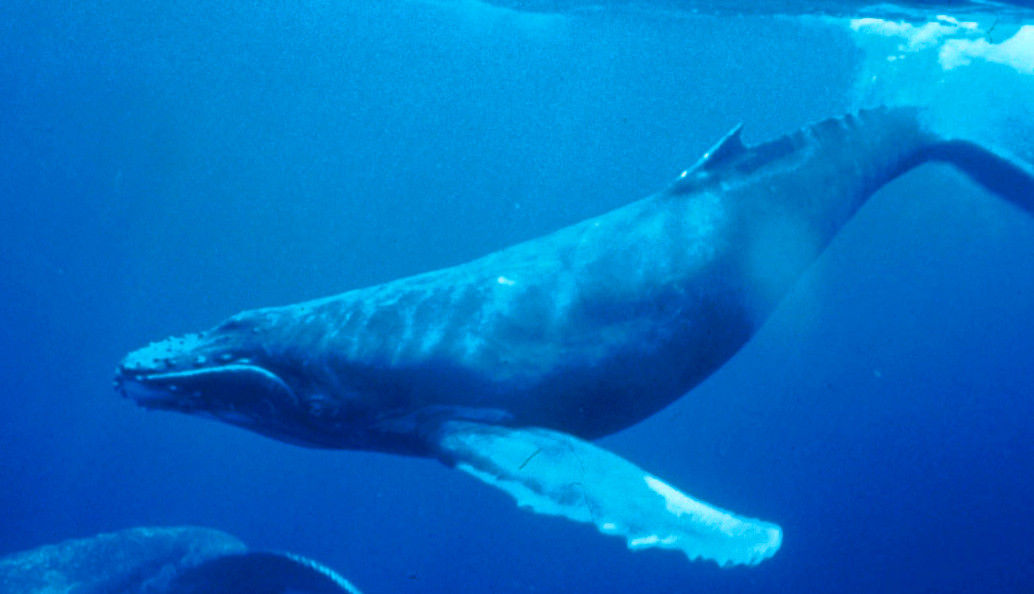
Humpback Whale Size & Weight: Up to 18m Long, 30 Tons Heavy
The ocean’s depths hold a myriad of wonders, but few creatures capture our imagination quite like the majestic humpback whale. Renowned for their acrobatic breaches, haunting songs, and distinctive long flippers, these gentle giants are among the most iconic marine mammals. A key aspect of their awe-inspiring presence is their sheer scale. Understanding the
Buckelwal Gewicht, or humpback whale weight, along with their impressive length, offers a profound appreciation for their adaptations and their critical role in marine ecosystems. These colossal dimensions are not merely statistics; they are a testament to an evolutionary journey shaped by life in the vast, open ocean. From their robust body structure to the mechanics of their feeding apparatus, every aspect of a humpback whale’s physical makeup is optimized for survival and thriving as a filter feeder of immense proportions.
The Astonishing Dimensions of the Humpback Whale
When we speak of the humpback whale, we are truly talking about a creature of immense scale. On average, adult humpbacks measure around 13 meters (approximately 43 feet) in length. To put this into perspective, that’s roughly the length of a standard city bus! However, these whales are capable of growing even larger, with some individuals reaching an astounding 18 meters (nearly 60 feet) from nose to tail. Imagine an animal as long as four family cars parked end-to-end – that’s the maximum span of a fully grown humpback. This impressive length makes them formidable figures in the marine landscape, capable of traversing vast ocean distances with powerful strokes of their massive fluke.
Accompanying their considerable length is an equally staggering mass. The average
Buckelwal Gewicht typically ranges between 25 and 30 tons. To truly grasp this immense weight, consider that a single humpback whale can weigh as much as five adult African elephants combined, or the equivalent of several fully loaded tractor-trailers. This makes them one of the heaviest animals on Earth. This substantial bulk is supported by a remarkably robust body structure, distinguishing them even among other rorquals – the family of baleen whales known for their characteristic throat pleats. Their powerful build allows them to perform their famed breaches, propelling tons of muscle and bone clear out of the water, a spectacle that continues to mystify and delight observers worldwide. The sheer force required for such a display is a clear indicator of the incredible strength inherent in their massive frames. For a deeper dive into how much these giants truly weigh, explore our detailed article on
Humpback Whale Weight: How Much Does This Giant Weigh?.
From Newborn Calf to Oceanic Colossus: The Humpback's Growth Journey
The life cycle of a humpback whale begins on a comparatively smaller, yet still impressive, scale. At birth, a humpback calf is already a substantial creature, typically measuring around 4 meters (13 feet) long and weighing approximately 900 kilograms (nearly 2,000 pounds). This initial size is crucial for their survival in the open ocean, offering some protection and thermal insulation from the cold waters. The newborn calf embarks on a period of incredibly rapid growth, sustained by its mother's exceptionally rich and fatty milk. For about a year, the calf nurses, gaining immense weight and length daily, often increasing its body weight several times over. This intensive period of parental care and nutrient-rich feeding is vital for building the calf's strength and blubber reserves, preparing it for an independent life.
After weaning, typically around one year of age, the young whale transitions to a solid diet, primarily consisting of krill and small fish, which it filters from the water using its baleen plates. At this stage, it often forms temporary bonds with other young whales, learning vital survival and feeding techniques. Humpback whale females exhibit a remarkable reproductive strategy, typically giving birth to a single calf every three years. This extended inter-calving interval allows mothers sufficient time to recover from the energetic demands of gestation and lactation, ensuring they can provide optimal care for their offspring. With an average lifespan that can extend up to 90 years, humpbacks undergo a prolonged growth phase, gradually accumulating the enormous mass and length that characterize the adults. This journey from a 900 kg calf to a 30-ton adult is one of the most remarkable growth evolutions in the animal kingdom, highlighting the efficiency of their biological systems. To understand this incredible transformation in more detail, refer to our article
From 900 kg to 30 Tons: Humpback Whale Weight Evolution.
Beyond Size: Distinguishing Features of the Humpback
While their size and the **Buckelwal Gewicht** are certainly defining characteristics, humpback whales possess several other unique physical traits that contribute to their identity and functionality within their marine environment.
*
Exceptional Flippers: Perhaps the most striking feature is their extraordinarily long pectoral fins, often referred to as "flippers." These can reach up to one-third of their entire body length, making them proportionally the longest flippers of any whale species. Far from being merely decorative, these massive appendages are incredibly agile, playing a crucial role in the humpback's maneuverability, especially during acrobatic displays, tightly coordinated feeding behaviors like bubble-net feeding, and even social interactions and communication.
*
Distinctive Skin and Coloration: Humpbacks typically exhibit a black coloration on their dorsal (upper) side, while their ventral (underside) surfaces and flanks can vary widely from white to black, depending on the individual and population. This unique pattern, particularly on the underside of their flukes, acts as a natural "fingerprint," allowing researchers to identify individual whales. Furthermore, their bodies often bear white scars, primarily from barnacle infestations. These parasitic crustaceans attach themselves to the whale's skin, leaving tell-tale white patches when they detach. The presence of golden-yellow diatoms, microscopic algae that can grow on their skin, also adds to their unique appearance, particularly in colder waters.
*
Head and Feeding Apparatus: The humpback's head is characterized by a relatively flat rostrum (upper jaw) adorned with distinctive, knotty skin thickenings called tubercles. Each tubercle typically sports one or two bristles, believed to have a sensory function, possibly detecting water movement or prey. Centrally located on the top of the head are their two blowholes, through which they exhale a powerful, misty spume. Their mouths contain 14 to 20 prominent throat grooves, or pleats, extending from the chin all the way to the navel. These pleats expand like an accordion, allowing the whale to engulf vast quantities of water and prey during filter feeding. Inside, they house rows of coarse baleen plates – between 270 and 400 on each side – which can grow up to 0.8 to 1.0 meters (2.6 to 3.3 feet) long. These stiff, brush-like structures are instrumental in filtering small organisms like krill and schooling fish from the water, forming the backbone of their diet.
The Challenges and Wonders of Such Immense Size
The sheer scale of the humpback whale presents both incredible advantages and unique challenges. Their massive size offers inherent protection from most predators, making adult humpbacks largely invulnerable to all but the largest shark species or pods of killer whales, particularly when they are young or vulnerable. It also allows them to store vast reserves of energy in the form of blubber, enabling them to undertake epic migratory journeys covering thousands of kilometers between feeding and breeding grounds. This incredible capacity for energy storage and long-distance travel is directly linked to their enormous body mass and the efficiency with which they can accumulate nutrients.
However, their substantial **Buckelwal Gewicht** can also lead to significant vulnerabilities, especially when they stray into shallow coastal waters. A tragic example of this challenge occurred when a humpback whale, estimated to be between 12 and 15 meters long and weighing around 15 tons, became stranded near Niendorf in the Baltic Sea. Experts noted that attempting to return such a massive animal to deeper water is exceptionally difficult. Unlike the North Sea, the Baltic Sea lacks significant tidal movements that could naturally assist in refloating a stranded whale. Without the powerful push and pull of a strong tide, the immense weight of the whale presses down, embedding it further into the seabed or sand, making human intervention a monumental and often insurmountable task. Such incidents underscore the delicate balance between their adaptation for vast oceanic life and the dangers posed by unusual circumstances in restricted environments. Moreover, their requirement for vast feeding grounds and undisturbed migratory routes highlights the importance of ongoing conservation efforts to protect these magnificent creatures and the immense spaces they call home.
Conclusion
The humpback whale, with its impressive length of up to 18 meters and a staggering **Buckelwal Gewicht** reaching 30 tons, truly stands as a marvel of marine biology. From the 900 kg calf to the adult colossus, their growth journey is one of rapid development and immense physical transformation, supported by unique adaptations like their powerful flippers, distinctive skin patterns, and sophisticated filter-feeding apparatus. While their size offers numerous advantages for survival in the vast ocean, it also presents significant challenges, particularly when they encounter human-modified environments or become stranded in shallow waters. Understanding these dimensions and the biology behind them not only deepens our appreciation for these incredible animals but also reinforces the vital importance of protecting their habitats and ensuring their continued presence in our oceans for generations to come. Their very existence is a powerful reminder of the grandeur and delicate balance of the natural world.