The Incredible Journey: Charting Humpback Whale Weight Evolution
Few creatures in the ocean command as much awe and wonder as the humpback whale (
Megaptera novaeangliae). These majestic giants traverse vast oceanic distances, captivating observers with their acrobatic breaches and haunting songs. But beneath their graceful movements lies an astonishing physical reality: an incredible journey of growth, transforming from a relatively modest newborn into a colossal adult. Understanding the `Buckelwal Gewicht` – or humpback whale weight – reveals one of nature's most impressive feats of biological engineering and adaptation.
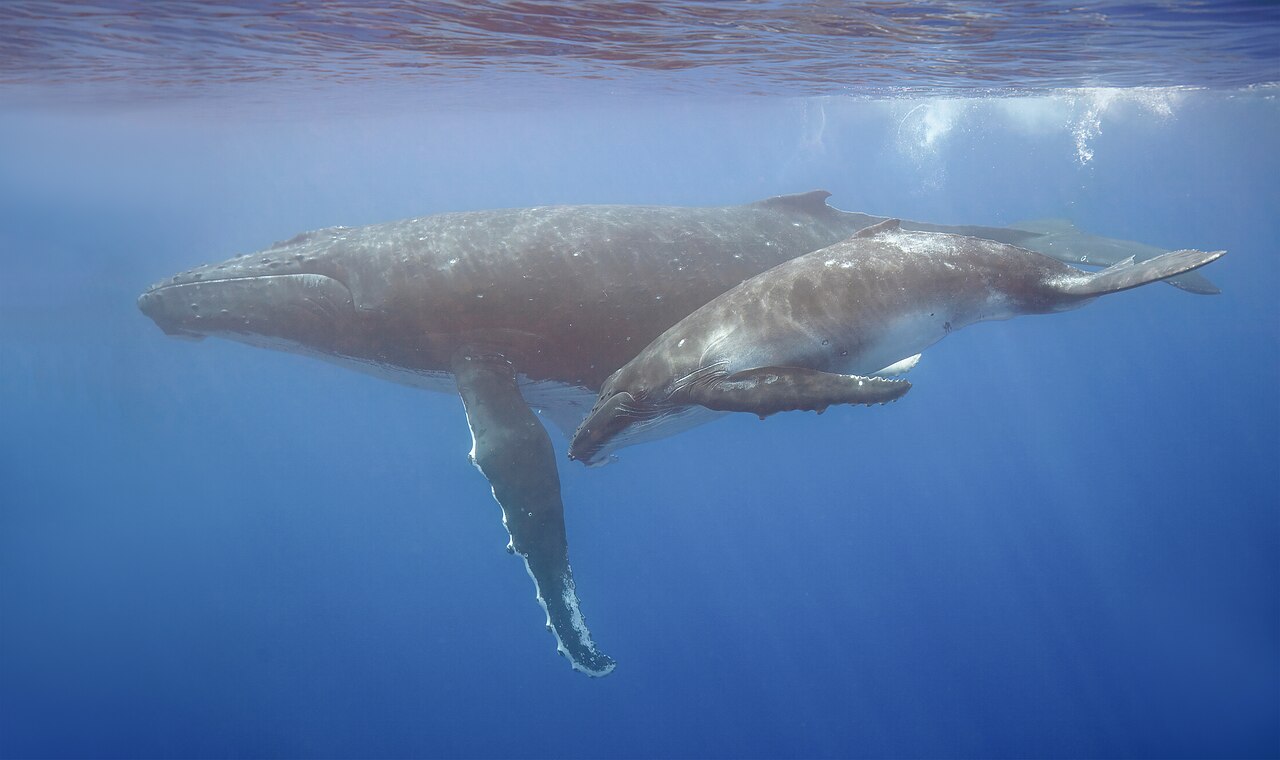
From birth, a humpback embarks on a rapid ascent in mass, undergoing a weight evolution that sees it grow from a "mere" 900 kilograms to an astounding 30 tons. This dramatic increase is a testament to the richness of their diet, the efficiency of maternal care, and the unique physiological adaptations that allow them to thrive in the vast, open ocean. Join us as we explore the remarkable weight progression of these magnificent marine mammals.
From Newborn to Giant: The Astonishing Weight Gain of Humpbacks
The life cycle of a humpback whale begins with a significant, yet comparatively small, splash. The journey from birth to maturity involves one of the most rapid and substantial weight increases in the animal kingdom.
A Mighty Start: The Humpback Calf
At the moment of birth, a humpback whale calf already possesses an impressive `Buckelwal Gewicht` of approximately 900 kilograms (nearly a ton!) and measures around four meters in length. While substantial by human standards, this is a fraction of its adult potential. Born in warm, protected waters, these vulnerable calves rely entirely on their mothers for survival and, crucially, for nourishment.
For about a year, the mother provides an incredibly rich, fat-laden milk, essential for the calf's rapid growth. This milk is so energy-dense that it allows the calf to gain weight at an astonishing rate – sometimes hundreds of pounds per day. This crucial period of intense maternal care is vital, preparing the young whale for the independent life it will soon lead in the nutrient-rich, but often colder, feeding grounds. The speed at which these calves put on weight is a marvel, highlighting the efficiency of whale lactation and the high energy demands of early development.
The Adolescent Phase: Rapid Development and Independence
After approximately one year, the young humpback calf begins its transition from milk to solid food, typically krill and small schooling fish. This period marks a critical phase where the whale continues its exponential growth, albeit through self-feeding. Young whales often form temporary groups, an important social learning period before they fully mature.
During adolescence, their bodies continue to build mass and strengthen, developing the robust musculature and thick blubber layers characteristic of adults. This sustained growth is crucial for equipping them with the necessary reserves for migration, reproduction, and survival in diverse marine environments. The journey from a 900 kg calf to an adult weighing several tons is a testament to the abundant resources of the ocean and the humpback's specialized feeding mechanisms.
The Adult Humpback: A Colossal Presence
Once fully mature, the humpback whale becomes a truly colossal creature, embodying a magnificent blend of power and grace. Their `Buckelwal Gewicht` reaches its peak, making them one of the most impressive animals on the planet.
Peak Buckelwal Gewicht: Understanding the Scale
Adult humpback whales typically achieve an average length of about 13 meters, though some individuals can stretch up to 18 meters. Their weight, reflecting their robust build, ranges from 25 to 30 tons. To put this into perspective, 30 tons is roughly equivalent to the weight of five large adult elephants or a fully loaded semi-trailer! This immense mass is crucial for their survival, providing insulation, energy reserves, and the sheer power needed for their epic migrations and dramatic feeding behaviors.
It's important to note that while they are large, humpbacks are considered relatively small among the baleen whales when compared to true giants like the blue whale. However, their body is exceptionally robust and powerful for their size, a distinguishing feature among rorquals. For more in-depth information on how this incredible mass is sustained, you can explore our detailed article on
Humpback Whale Weight: How Much Does This Giant Weigh?
Anatomy of a Heavyweight: How Humpbacks Support Their Mass
The `Buckelwal Gewicht` is not just about raw numbers; it's intricately linked to their unique anatomy. Humpbacks are equipped with a suite of physical characteristics that enable them to achieve and maintain their immense size:
*
Robust Body: Compared to other rorquals, humpbacks possess a particularly muscular and stout physique, providing the framework for their heavy build.
*
Blubber Layer: A thick layer of blubber beneath their skin serves multiple purposes: insulation in cold waters, buoyancy in the water column, and a vital energy reserve during lean times or long migrations.
*
Throat Grooves: Ranging from 14 to 20, these pleats extend from their chin to their navel, allowing their mouths to expand enormously to engulf vast quantities of water and prey during feeding.
*
Baleen Plates: Inside their massive mouths, humpbacks have 270 to 400 coarse baleen plates on each side, which can be 0.8 to 1.0 meters long. These fibrous plates act like a sieve, filtering small prey from the swallowed seawater.
*
Distinctive Flippers: Their remarkably long pectoral fins, or flippers, can reach up to one-third of their body length. These are not only crucial for maneuvering their immense bodies but also contribute to their overall impressive
humpback whale size & weight.
*
Unique Skin Features: Their skin is often a tapestry of black on top and white underneath, varying by population and individual. White patches of scar tissue are common, resulting from barnacle infestations, and their bodies can sometimes be covered by golden-yellow diatoms. The flat rostrum (upper jaw) is dotted with distinctive tubercles, each sporting one or two bristles.
These anatomical features work in concert, allowing the humpback to efficiently feed, navigate, and survive, all while supporting its colossal weight.
Factors Influencing Humpback Whale Weight
The final `Buckelwal Gewicht` an individual reaches is not solely a matter of age; a complex interplay of environmental and physiological factors determines their precise size and condition.
Diet and Feeding Strategies: Fueling the Giants
The primary driver of a humpback's weight is its diet. These whales are filter feeders, consuming vast quantities of krill, copepods, and small schooling fish like herring, mackerel, and capelin. Their famous "bubble-net feeding" technique, where groups of whales blow bubbles in a circle to create a net and corral prey, showcases their sophisticated approach to securing the immense caloric intake required to maintain their massive bodies. A healthy feeding season in rich polar waters is essential for building up the blubber reserves needed to sustain them through their non-feeding breeding season in tropical waters.
Habitat and Health: The Environmental Impact
Food availability, ocean health, and individual well-being all play significant roles in a humpback's weight. A whale in a nutrient-rich environment with ample prey will likely be heavier and healthier than one struggling in a depleted area.
Age is also a factor, with whales generally reaching their peak weight and length in adulthood. Humpbacks have an impressive lifespan, often living up to 90 years, allowing ample time for growth and sustained mass. However, external factors can impact individual size. For example, a juvenile or an unwell whale will have a lower body mass. The case of a stranded humpback near Niendorf, which was estimated to be between 12 and 15 meters long and weighing around 15 tons, highlights how individual animals might vary in size and how challenges like a lack of strong tides in the Baltic Sea can make it difficult to refloat such a massive creature. This instance also shows how expert estimations are crucial in understanding these animals, especially when direct measurements are difficult.
Conservation and the Future of Humpback Whale Weight
The history of humpback whales is a stark reminder of humanity's impact on these majestic creatures. Once severely depleted by commercial whaling, their populations are now slowly recovering thanks to international conservation efforts. Protecting their habitats, ensuring abundant food sources, and mitigating threats like ship strikes and entanglement in fishing gear are crucial for the continued health and growth of humpback populations.
A healthy ocean ecosystem is fundamental to supporting the immense `Buckelwal Gewicht` and the incredible life cycle of these animals. As stewards of the planet, our efforts to conserve marine environments directly contribute to the ability of humpbacks to thrive, reach their full size potential, and continue their astonishing weight evolution for generations to come.
Conclusion
The journey from a 900 kg calf to a 30-ton adult is a testament to the humpback whale's remarkable biological design and its vital role in marine ecosystems. The incredible `Buckelwal Gewicht` is not merely a number but a reflection of their evolutionary success, their specialized adaptations, and the sheer abundance of life within our oceans. Understanding this weight evolution deepens our appreciation for these gentle giants and underscores the importance of ongoing conservation efforts to ensure that these magnificent creatures continue to grace our oceans for centuries, growing to their impressive, full potential.